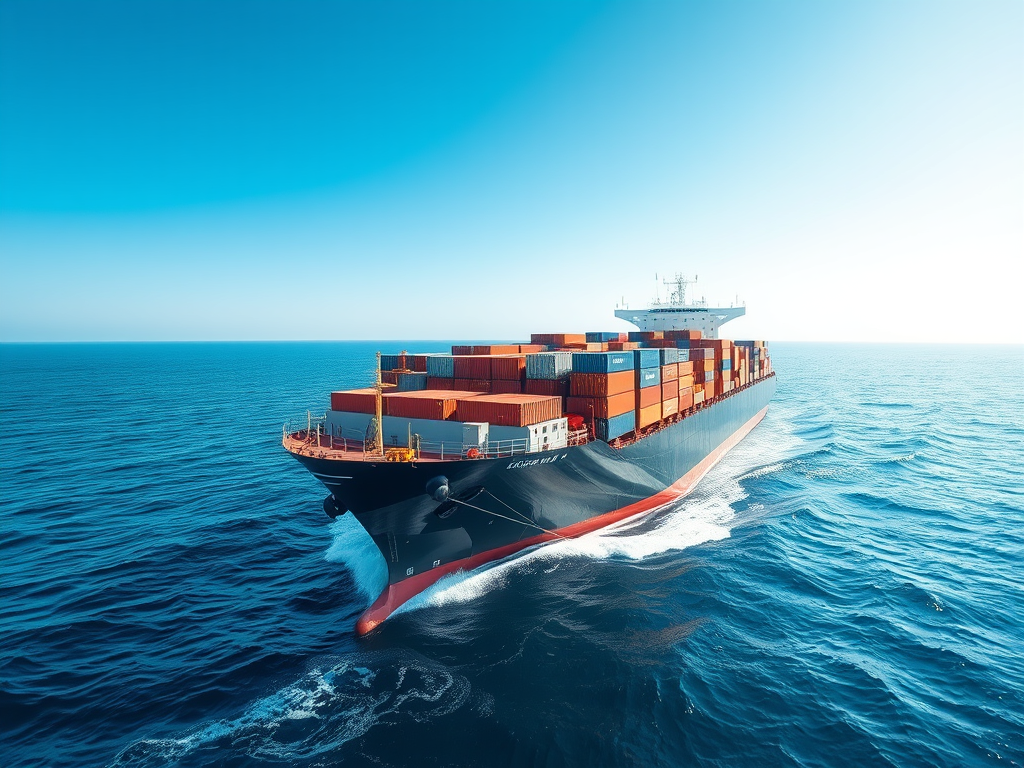
The containership orderbook has reached a new high in 2024, with a total of 8.3 million TEU, surpassing the previous peak of 7.8 million TEU set just a year earlier. This surge in new orders is primarily driven by the need to replace aging ships that no longer comply with increasingly stringent environmental regulations. Despite this influx of new contracts, however, the pace of ship scrapping has sharply declined in recent years, reflecting a significant shift in the industry’s dynamics.
According to BIMCO’s Chief Shipping Analyst, Niels Rasmussen, 2024 saw a remarkable 4.4 million TEU worth of new contracts, the second-largest ever recorded. This growth in the orderbook is notable, especially considering that deliveries also reached a record high of 2.9 million TEU. It’s worth noting that the orderbook is overwhelmingly dominated by larger vessels: ships of 8,000 TEU or more account for a staggering 92% of the total capacity, with the 12,000–17,000 TEU category making up 46% alone.
The orderbook distribution is heavily skewed towards Chinese shipyards, which hold 72% of the global orderbook, followed by South Korea with 22% and Japan with a mere 5%. This concentration in China highlights the region’s dominant role in shipbuilding and underlines the significant shift in shipyard geography over recent years.
Liner operators, too, are consolidating their control over the sector, now commanding 79% of the orderbook capacity. This marks a notable rise from 61% in 2019, reinforcing the trend towards larger operators exerting greater influence over fleet composition. Consequently, we can expect liner operators’ share of the fleet to continue growing in the coming years.
However, while the orderbook is set to expand rapidly in the next five years, with deliveries peaking in 2027, the rate of ship recycling has slowed considerably. In the past four years, only 166 ships and 256,000 TEU were recycled, contributing to a significant increase in the fleet’s average age. With older vessels now representing 11% of the fleet, the industry faces a pressing need for fleet modernization to maintain competitiveness and sustainability.
The gap between newbuild orders and scrapping rates is widening, as shipowners delay the retirement of older vessels. The global recycling market, hindered by factors such as volatile steel prices, fluctuating currencies, and geopolitical instability, is struggling to keep pace with the demand for fleet renewal. In fact, even with the industry’s need to replace these aging vessels to meet new emission standards, the scrapping volume remains low. As a result, the industry’s fleet is projected to grow by 16% by the end of 2029, driven largely by the delivery of large, modern ships.
This growing disparity between the fleet’s age and its environmental compliance is a key issue for the shipping industry. As BIMCO’s Rasmussen aptly points out, recycling activity is likely to remain subdued unless stronger incentives and regulatory pressure are introduced, particularly as more stringent greenhouse gas emissions regulations come into effect. The future of the shipping industry hinges not only on modernizing fleets but also on addressing the environmental impact of older, less-efficient vessels.
In summary, while the record-breaking orderbook signals a healthy future for containerships, the sector must confront the dual challenge of modernizing its aging fleet while navigating the complexities of a shrinking recycling market. The industry’s ability to balance growth with sustainability will define its trajectory in the coming decade.
 The Shipping Almanac
Σχολιάστε