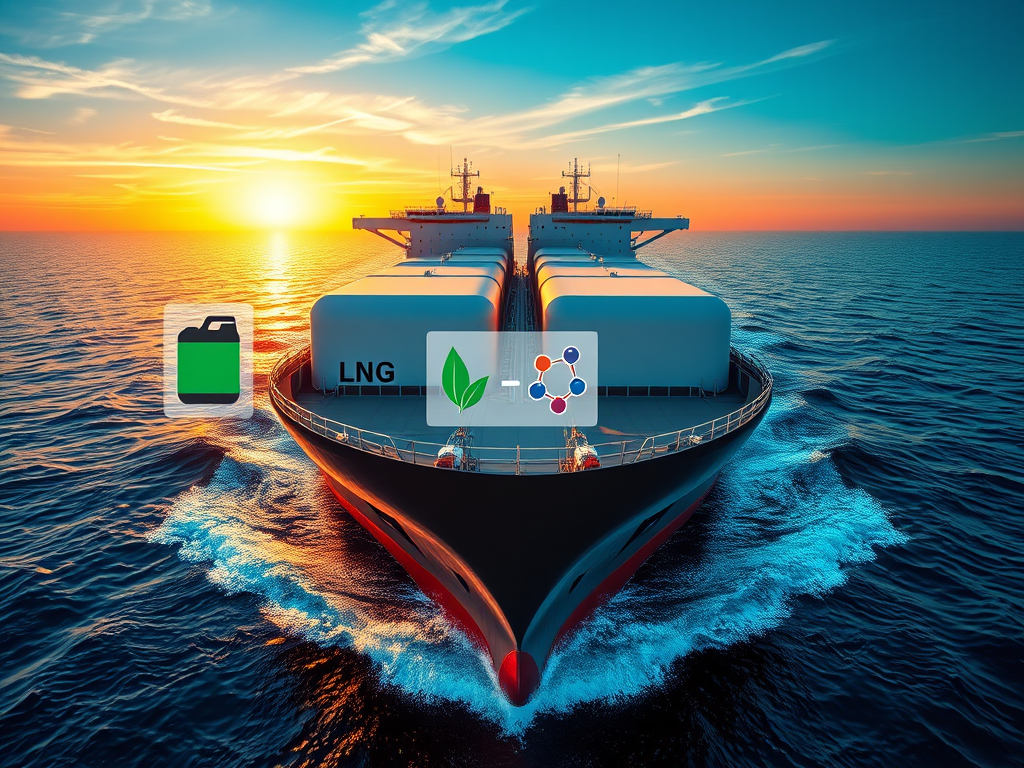
The maritime industry, responsible for approximately 90% of global trade, is a significant contributor to greenhouse gas emissions, accounting for about 3% of the global total. As the sector faces increasing pressure to reduce its environmental footprint, the exploration of alternative fuels has become paramount. This article delves into the potential of various alternative fuels, examining their characteristics, benefits, and challenges in the pursuit of sustainable shipping.
1. Liquefied Natural Gas (LNG):
LNG has gained traction as a marine fuel due to its ability to reduce sulfur oxides (SOx) and nitrogen oxides (NOx) emissions. It offers a reduction in CO₂ emissions compared to traditional marine fuels. However, the environmental benefits of LNG can be offset by methane slip, where unburned methane—a potent greenhouse gas—escapes into the atmosphere during combustion. Additionally, the infrastructure for LNG bunkering is still developing, which may limit its widespread adoption.
2. Biofuels:
Derived from renewable organic materials, biofuels present a promising alternative. They can be used in existing engines with minimal modifications, making them a practical choice for the current fleet. Biofuels can significantly reduce CO₂ emissions, depending on the feedstock and production processes used. However, challenges such as feedstock availability, competition with food production, and sustainability concerns need to be addressed to ensure their viability.
3. Methanol:
Methanol is a liquid at ambient temperature, simplifying storage and handling compared to gaseous fuels. It can be produced from various feedstocks, including natural gas, biomass, and captured CO₂, offering pathways to carbon neutrality. Methanol combustion results in lower SOx and particulate emissions. However, its lower energy density means that ships require larger fuel tanks or more frequent refueling, which could impact vessel design and operations.
4. Ammonia:
Ammonia is emerging as a zero-carbon fuel option, especially when produced using renewable energy sources. It does not emit CO₂ during combustion, making it attractive for decarbonization efforts. Nonetheless, ammonia is toxic and requires careful handling and storage. Its lower energy density compared to traditional fuels necessitates larger storage volumes, and the production of nitrogen oxides during combustion must be managed with appropriate technologies.
5. Hydrogen:
Hydrogen offers a zero-emission solution, producing only water vapor when used in fuel cells. It has a high energy content by weight but a low energy density by volume, posing storage challenges. Hydrogen can be stored as a compressed gas or in liquid form at extremely low temperatures, both of which require specialized infrastructure. The production of green hydrogen, using renewable energy for electrolysis, is currently limited and costly, but advancements are ongoing to enhance its feasibility.
Conclusion:
The transition to alternative fuels in maritime shipping is complex, involving considerations of energy density, infrastructure requirements, environmental impact, and economic viability. Each alternative fuel presents unique advantages and challenges. A combination of these fuels, tailored to specific vessel types and operational profiles, may offer the most effective pathway toward sustainable maritime shipping. Continued research, investment, and collaboration among industry stakeholders are essential to navigate this transition successfully.
 The Shipping Almanac
Σχολιάστε