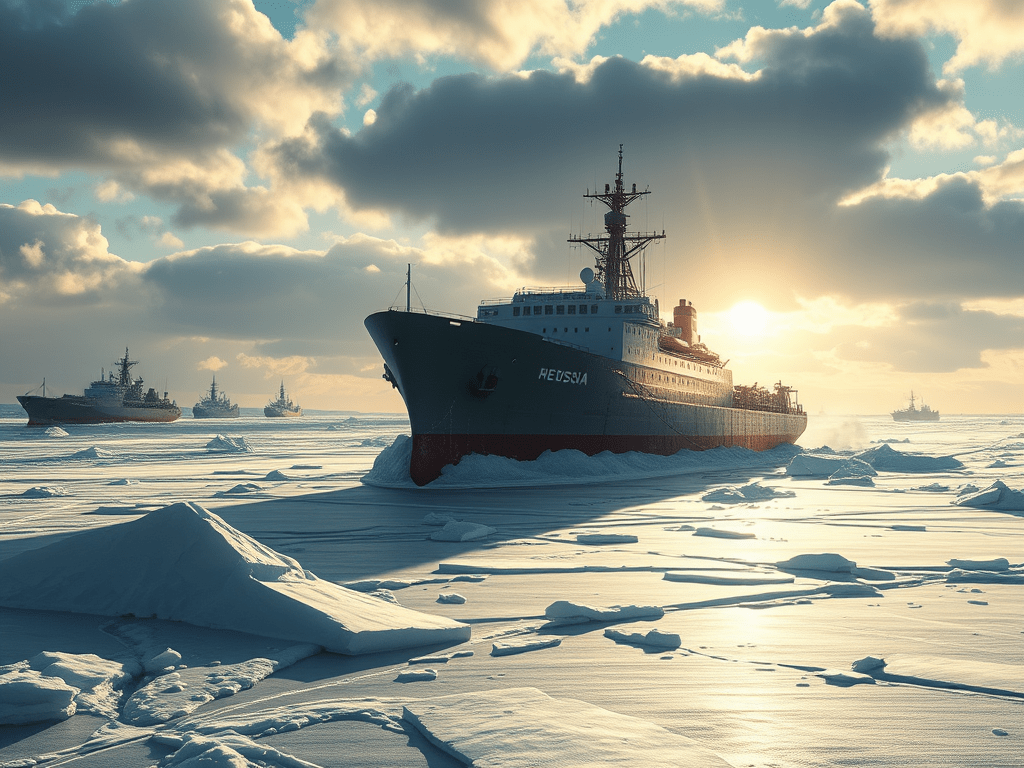
In the competition for Arctic dominance, icebreakers are becoming essential tools for trade, resource extraction, and military influence.
Russia is the undisputed leader in icebreakers, with at least 50 vessels, including 13 Arctic-capable ones and seven nuclear-powered, along with an extensive network of ports in the region. China reportedly has four icebreakers suitable for Arctic conditions, while new NATO members Sweden and Finland, along with the US and Canada, each possess their own specialized vessels. Additionally, there is a rising number of icebreaker cruise ships catering to Arctic tourists.
President Trump is focusing on expanding the U.S. presence in the Arctic by planning to order 40 large icebreakers. The U.S. Coast Guard’s Polar Star, weighing 13,000 tons, is a powerful ship capable of breaking through ice thicker than 20 feet, but it is the only U.S. icebreaker operating year-round.
Johanna Ikävalko, director of the Arctic Centre, underscores the increasing need for advanced icebreakers in the region but warns that the Northwest Passage remains a perilous route for navigation. She also expresses concern that the Arctic could evolve into a key battleground for global superpowers, with Russia having strategically developed multiple military bases near Murmansk over the years. Ikävalko predicts that the future world order may depend on which nations secure dominance in the Arctic.
 The Shipping Almanac
Σχολιάστε